

A complete 31-page community assessment report is also available to download as a PDF.
Table of Contents
- Table of Contents
- Letter from the Mayor
- Overview
- Acknowledgements
- Executive Summary
- About Des Plaines
- Research Framework
- Community Assessment Method
- Community Assessment Results
- Future Considerations
- Sources
Letter from the Mayor
Dear Community Members,
I am excited to share the 2024 Community Strengths and Needs Assessment report conducted by SPEAK Des Plaines. This assessment is the result of many months of collaboration with local organizations, city officials, and social service providers.

I am excited to share the 2024 Community Strengths and Needs Assessment report conducted by SPEAK Des Plaines. This assessment is the result of many months of collaboration with local organizations, city officials, and social service providers.
The survey gathered valuable information about life in Des Plaines, allowing us to build on existing strengths and identify areas for improvement within the community.
Community leaders and service providers will use the insights from this assessment to guide their decision-making and better serve residents.
I want to sincerely thank everyone who contributed to this community assessment. Your collaboration and commitment have made this assessment possible and will significantly benefit residents throughout Des Plaines in the future.
Sincerely,
Andrew Goczkowski, Mayor
Overview
This community strengths and needs assessment was conducted by SPEAK Des Plaines in partnership with the City of Des Plaines. The goal of this assessment was to collect and report factual, relevant, and objective information to inform local leaders, decision makers, and service providers to better understand and improve the lives of residents in Des Plaines.
Acknowledgements
We would like to extend a special thank you to all of the local resident-serving organizations that collaborated on this community assessment.
- Center of Concern
- Des Plaines Police Department
- Des Plaines Public Library
- Des Plaines Community Foundation
- Des Plaines Fire Department
- First United Methodist Church of Des Plaines
- Des Plaines History Center
- The Harbour
- Maine Township High School District 207
Executive Summary
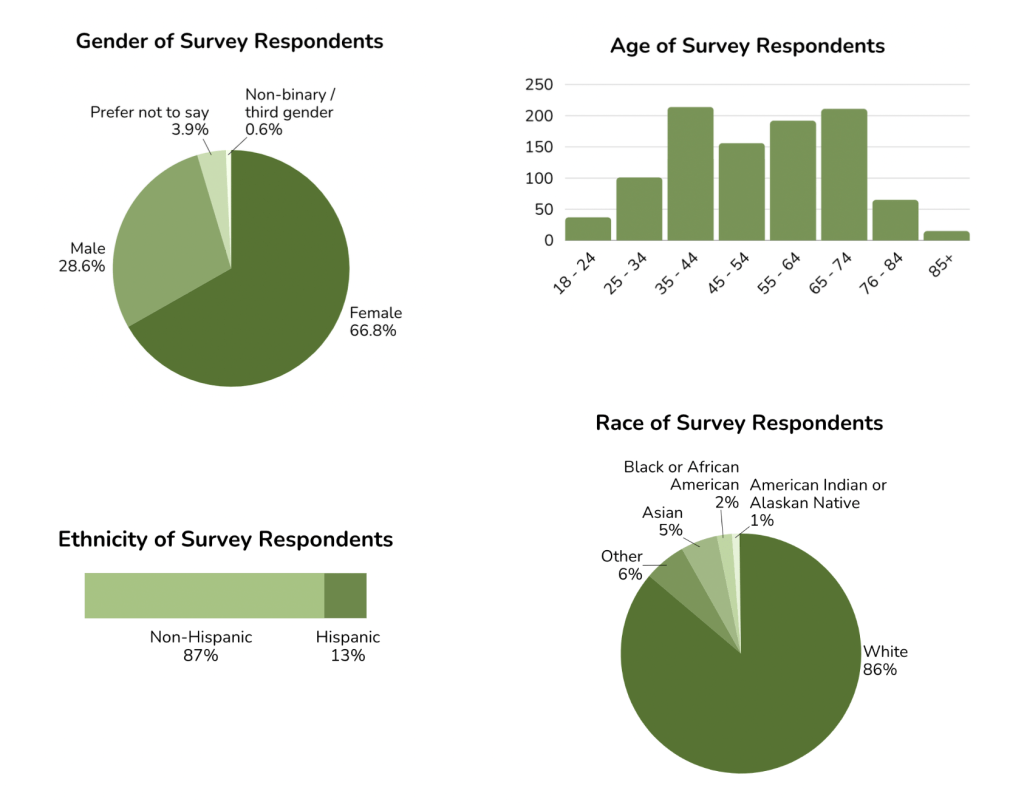
This report presents the findings of a community strengths and needs assessment conducted in 2024 in the city of Des Plaines. With approximately 60,000 residents, Des Plaines is a diverse community where 33% of residents were born outside the U.S. and 45% speak a language other than English at home. The assessment was conducted in two parts–focus groups with 22 total participants from local service-providing organizations, and a resident survey which collected 1,160 responses from residents.
This assessment report highlights key community strengths including schools, public safety, and social service organizations, and also identifies challenges such as residents lacking knowledge of how to access essential support services like food, mental health care, and housing assistance, and the need for revitalization downtown and solutions for traffic at train crossings.
As a result of this assessment, suggestions for future action include improving communication between residents and the city, exploring non-police responses to non-violent 911 calls, and enhancing collaboration among local service organizations. These steps aim to build a more connected and inclusive Des Plaines.
About Des Plaines
Spanning approximately 14 square miles, the city of Des Plaines is intersected by train lines, highways, and the Des Plaines River, and has a mix of residential, commercial, and industrial use.1
History
Des Plaines was originally inhabited by Potawatomi, Ottawa, and Ojibwa tribes.2 In 1835, Socrates Rand settled on the river. German immigrants began arriving in the area in the 1840s, and the city began to be laid out in the 1850s followed by incorporation in 1869. After World War II, the city experienced a period of development with the opening of O’Hare International Airport. The population of Des Plaines then rapidly expanded from 9,000 to more than 50,000.2
Current
The city of Des Plaines is currently home to nearly 60,000 residents in 23,000 households.3 From the year 2010 to 2020, the population grew by 4%.
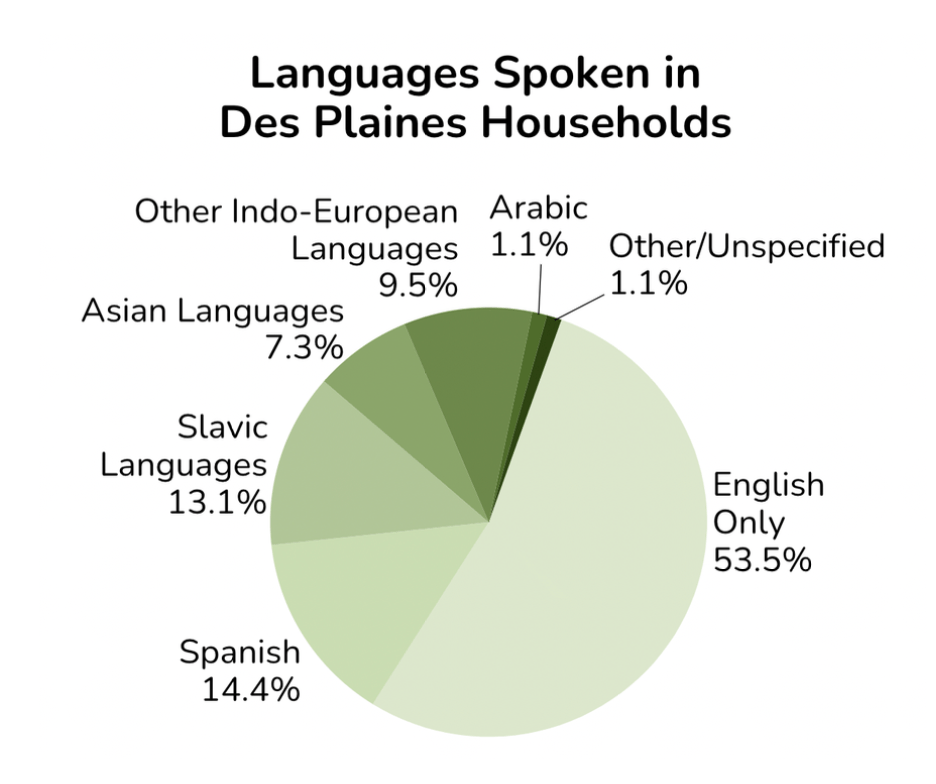
As of the most recent census, the median household income is $86,552, the per capita income is $42,057, and 7% of residents are living in poverty.3 33% of Des Plaines residents were born outside of the U.S. and 45% of residents speak a language other than English at home. The most common other languages are Spanish and slavic languages.4 18% of residents speak English “less than very well.”
Research Framework
The World Health Organization defines health as “a state of complete physical, mental and social well-being and not merely the absence of disease or infirmity.”5 Further, CDC defines social determinants of health as the conditions and environment that affect health, function, and quality of life such as where people live, learn, work, play, and worship.6
Social determinants of health include economic stability, education access and quality, health care access and quality, neighborhood and built environment, and social and community context.6 This assessment was conducted with the understanding that the community in which people live affects their quality of life and health outcomes.

Social Determinants of Health
Social determinants of health, per CDC, include access and quality of healthcare, access and quality of education, social and community context, economic stability, and neighborhood and built environment.6
Social vulnerability refers to “the resilience of communities when confronted by external stresses on human health […] such as natural or human-caused disasters or disease outbreaks. Reducing social vulnerability can decrease both human suffering and economic loss.”7
Des Plaines has a Social Vulnerability Index rating of 0.75 which considers socioeconomic status, household composition and disability, minority status and language, housing type, and transportation.8
Des Plaines has a Hardship Index of 51.8 compared to north suburban Cook County’s Hardship Index average of 34.5.8 This index reflects hardships such as “unemployment, age dependency, education, per capita income, crowded housing, and poverty.”
People in Des Plaines have access to many available resources including education, transportation, job opportunities, indoor and outdoor recreation, social services, places of worship, and health care, which all factor into social determinants of health.9
Community Assessment Method
The community strengths and needs assessment was conducted in two parts.
First, small focus groups were hosted with resident-serving organizations such as nonprofits, schools, and places of worship. 22 leaders and direct-service providers attended the focus groups in April 2024.
Next, a survey was distributed to residents in June and July 2024. The survey was distributed digitally through email and in-person via city hall, outreach events, and at resident-serving organizations. The goal was to collect at least 595 completed surveys. In two months, 1,160 total completed surveys were collected from Des Plaines residents.
Community Assessment Results
Focus Groups
During the focus group sessions, participants from local resident-serving organizations identified the need for improved community resources. They also identified existing strengths for residents of Des Plaines.
Community Strengths
- Diversity
- Safety and policing
- Fire department
- Public works
- Communications from city
- Many community groups to engage with
- Social service organizations
- Library
- Park district
- Events like Taste of Des Plaines and summer concerts
- Food pantries
- Des Plaines Theatre
- Schools and education
- Green spaces and parks
- Chamber of commerce
- Community college
Unmet Community Needs
Throughout the focus group conversations, there was an expressed desire for improved communication and coordination between local organizations such as nonprofits, schools, and city services, as well as a need for better access to affordable housing, mental health services, and transportation.
Suggestions for improving quality of life for residents included increasing multilingual resources, improving public transportation infrastructure, and preserving green and historical spaces to maintain the town’s unique character.
Safety and social inclusion were also recurring themes throughout the focus group sessions. While some participants highlighted existing strengths—such as the work of the park district, schools, and social workers—others identified significant gaps in services, particularly for marginalized groups, seniors, and teens.
The focus group discussions also touched on the importance of fostering a stronger sense of community through more inclusive events, better communication across language barriers, and a more vibrant downtown area to attract and retain residents.
Overall, the focus groups commonly expressed the need for strategic collaboration and targeted investments to build a more connected, equitable, and healthy Des Plaines.
Resident Survey
During the months of June and July 2024, a total of 1,160 survey responses were collected.
Services
Access to essential and recreational services within a community is important for contributing to overall well being and quality of life.
My community provides good social and recreational opportunities for me and my family.
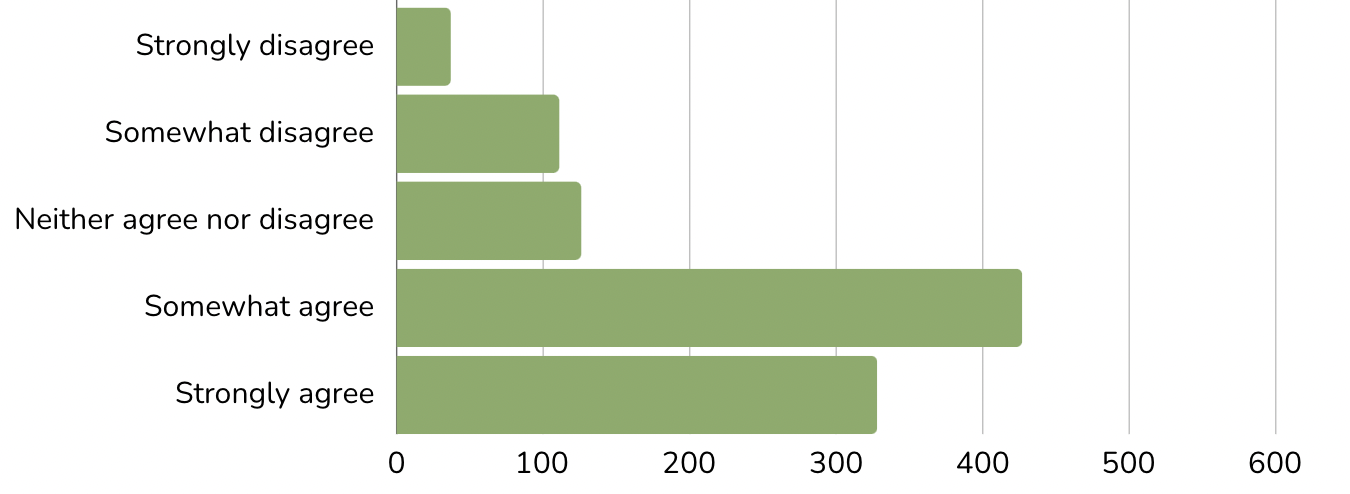
I have access to the transportation I need to get to places like work, the grocery store, or medical appointments.
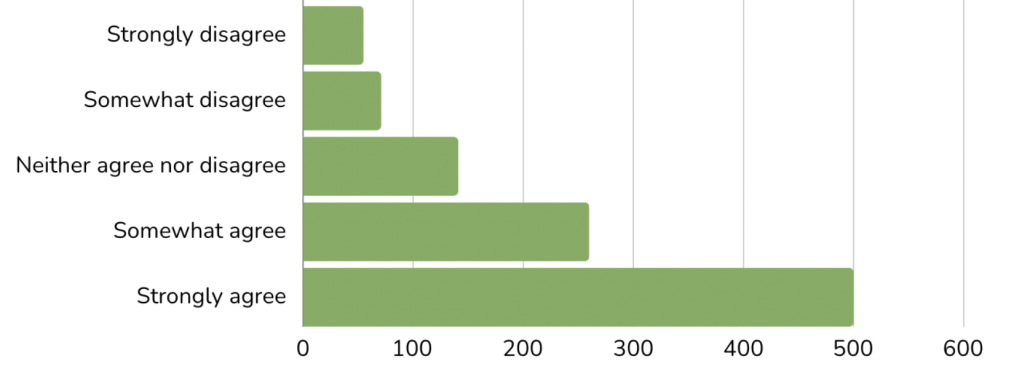
If I need help with basic needs such as food, mental health, or housing, I know how to get assistance.
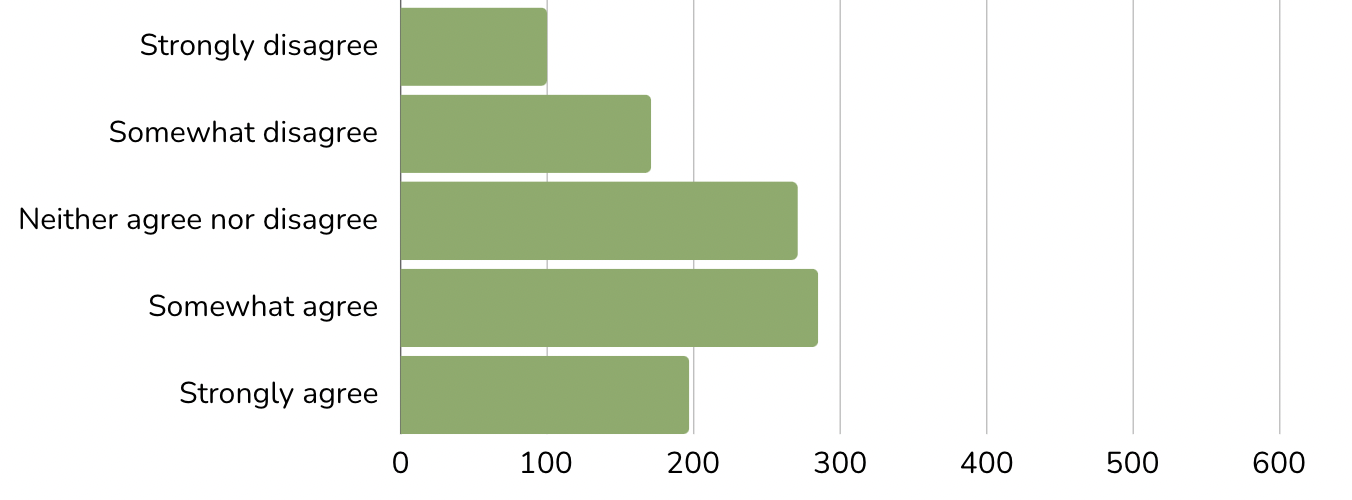
Safety
Safety and law enforcement are key components of a strong community where residents feel secure, respected, and confident in responsive public services.
I feel safe in my community.
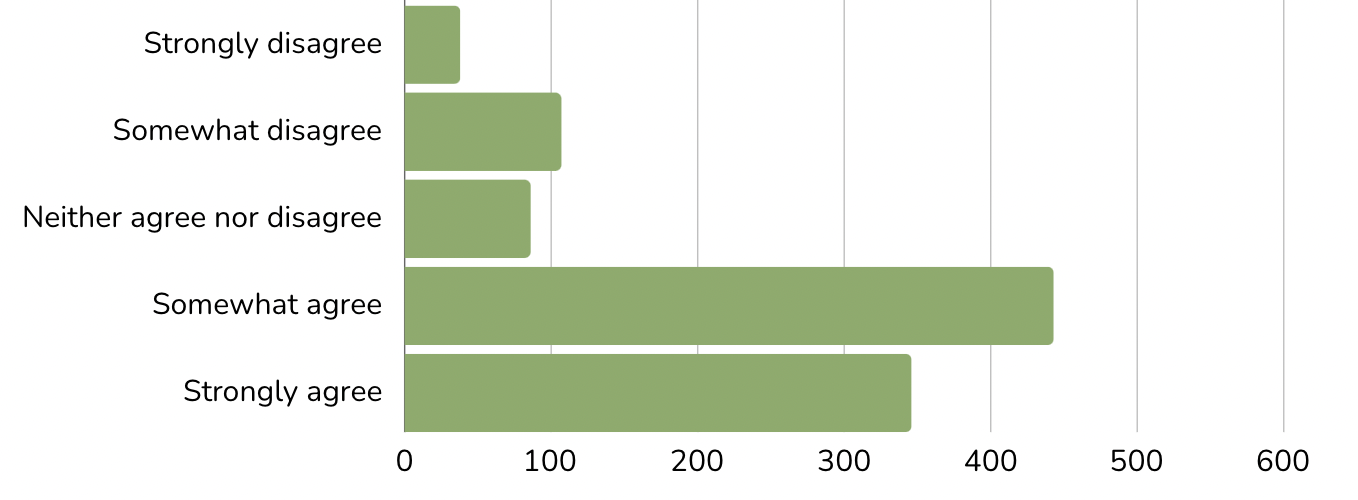
I feel law enforcement treats me with dignity and respect.

I feel law enforcement is responsive in my community when needed.
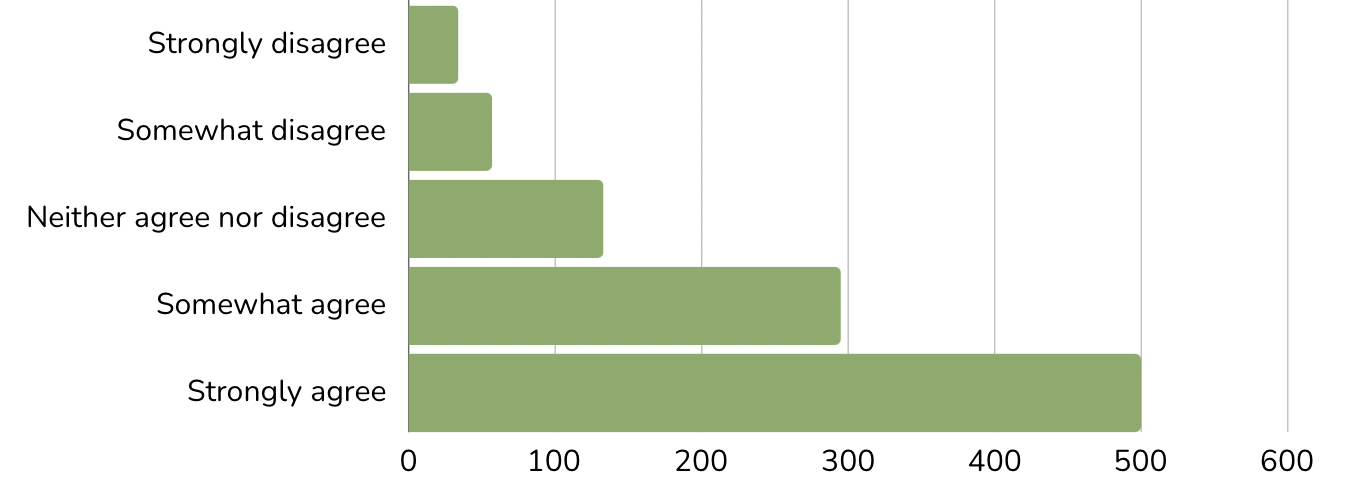
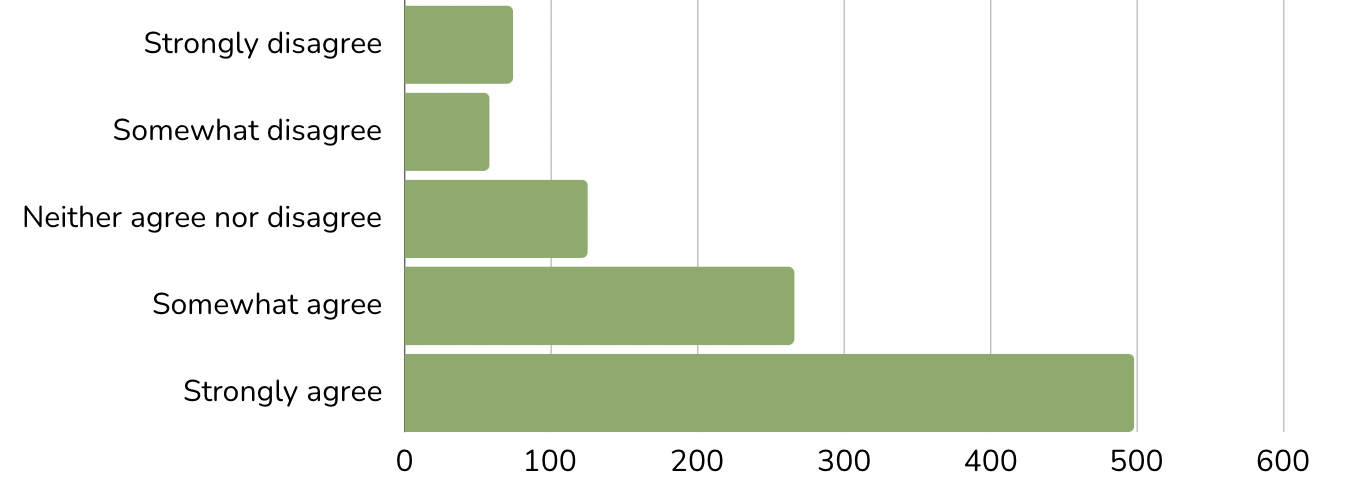
I think the city should consider opportunities to add non-police officer responses to non-violent 911 calls such as mental health crises, noise complaints, or parking issues.
Engagement
Active community engagement is essential so that residents are aware of local happenings, have a voice in decision making, and know their representatives, ensuring that everyone’s needs and perspectives are considered.
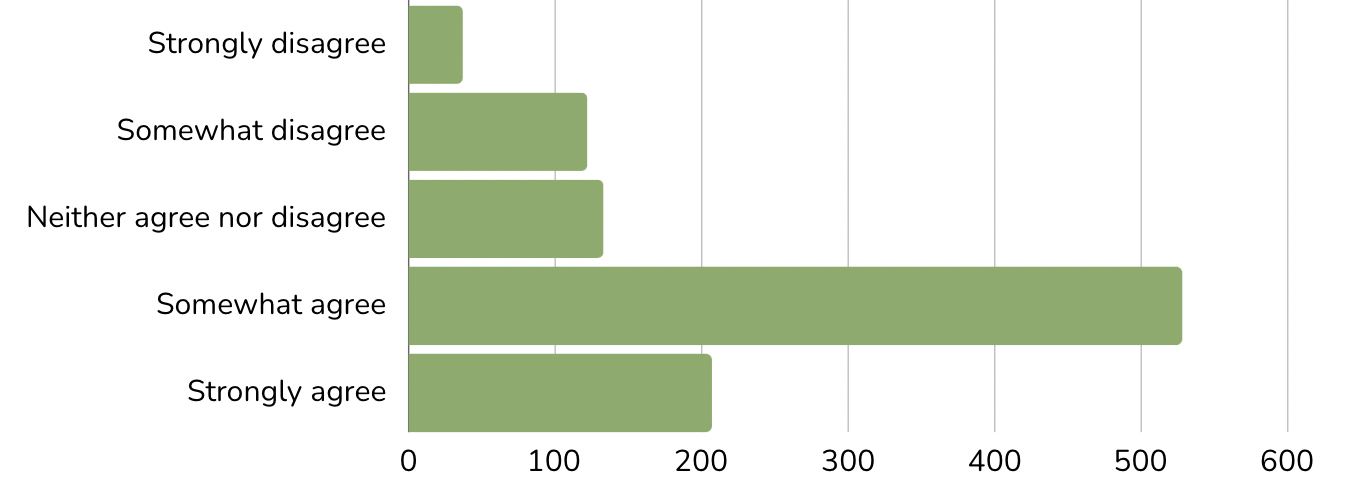
I know what is going on in my city.
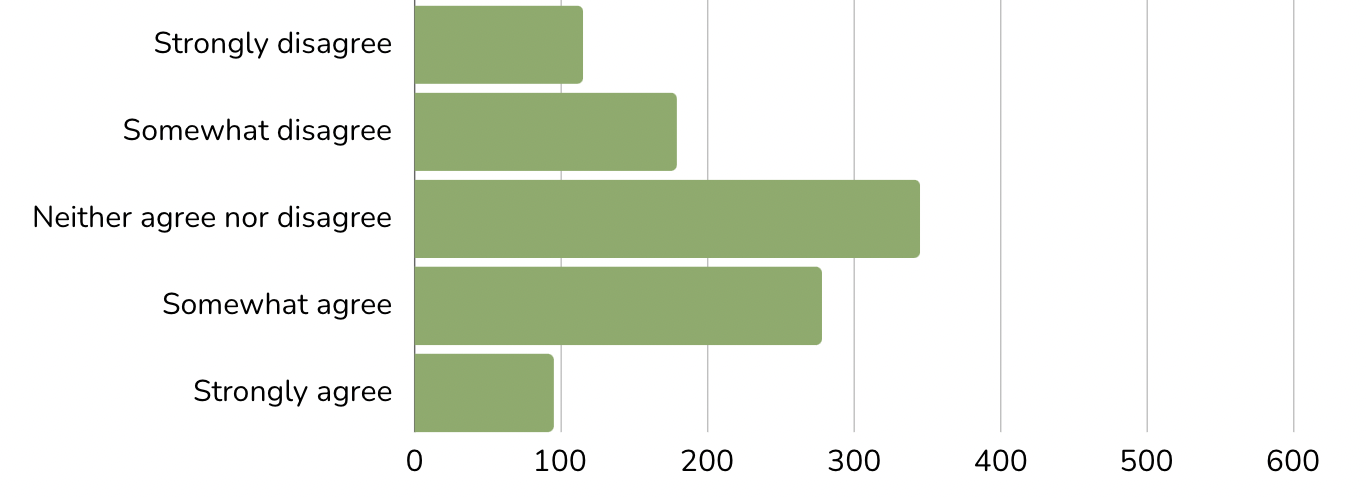
People in my neighborhood have input on important city decisions.
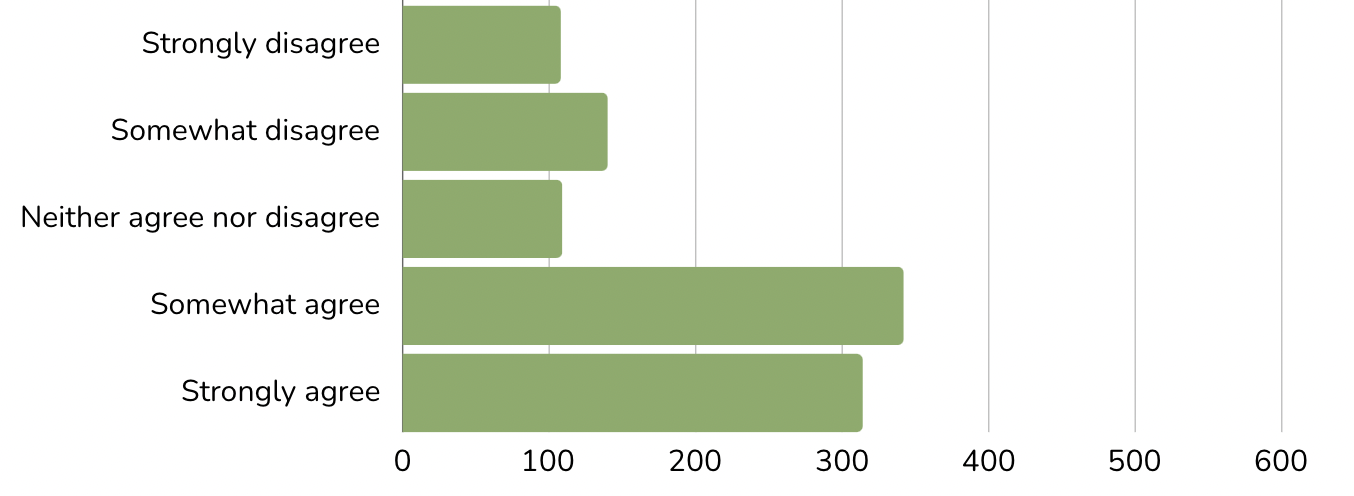
I know who my Des Plaines representatives are.
Social
A sense of belonging and social connection within a community is crucial for individual well being and community strength.
I feel like I belong in my community.
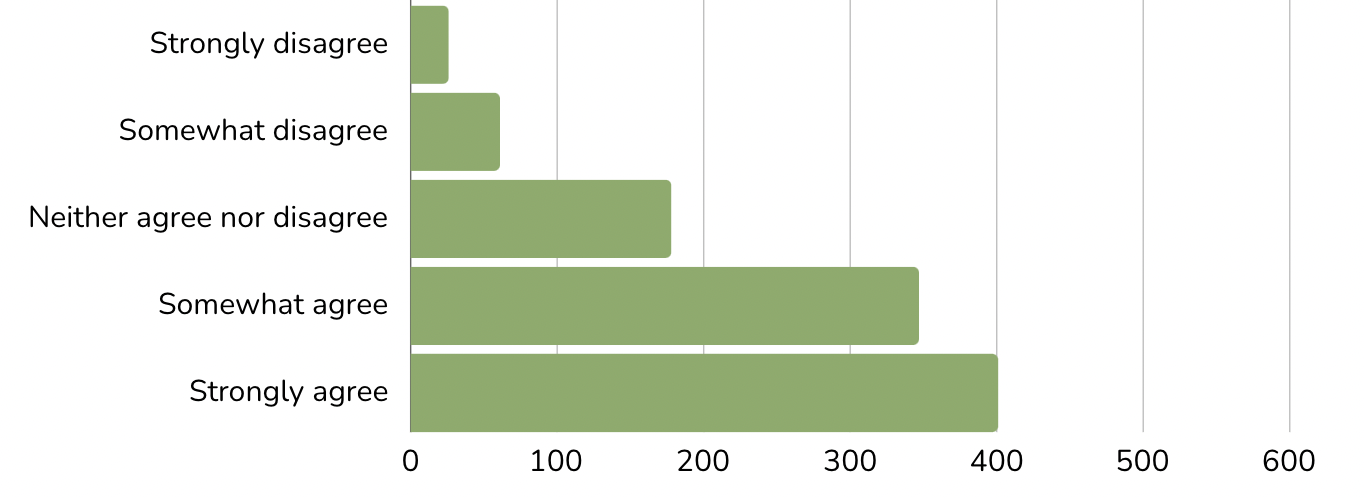
I know and talk to my neighbors.
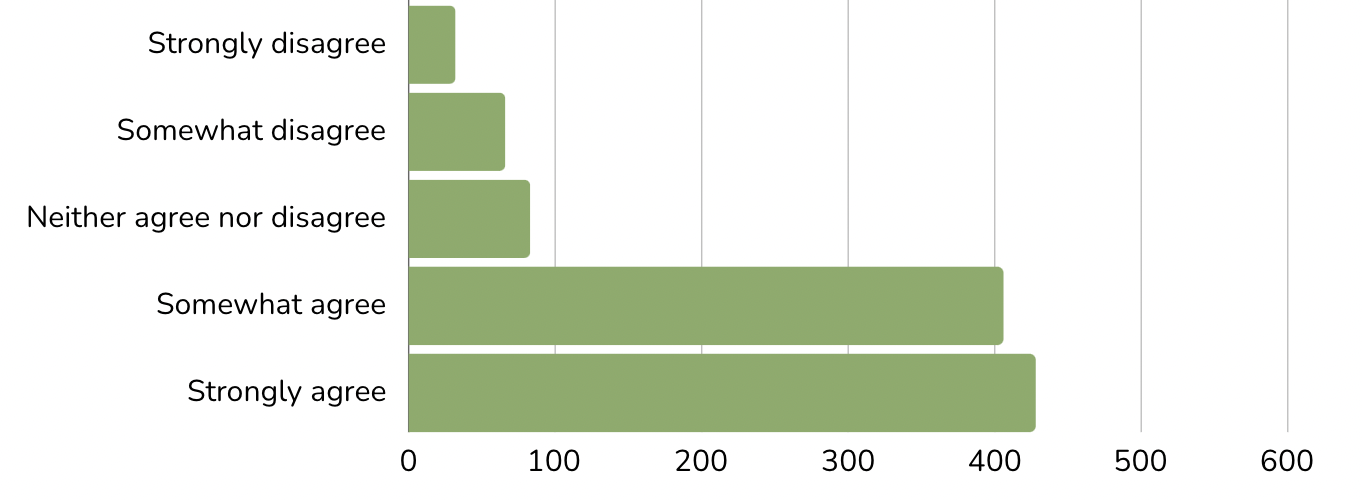
I have felt discriminated against in my community.
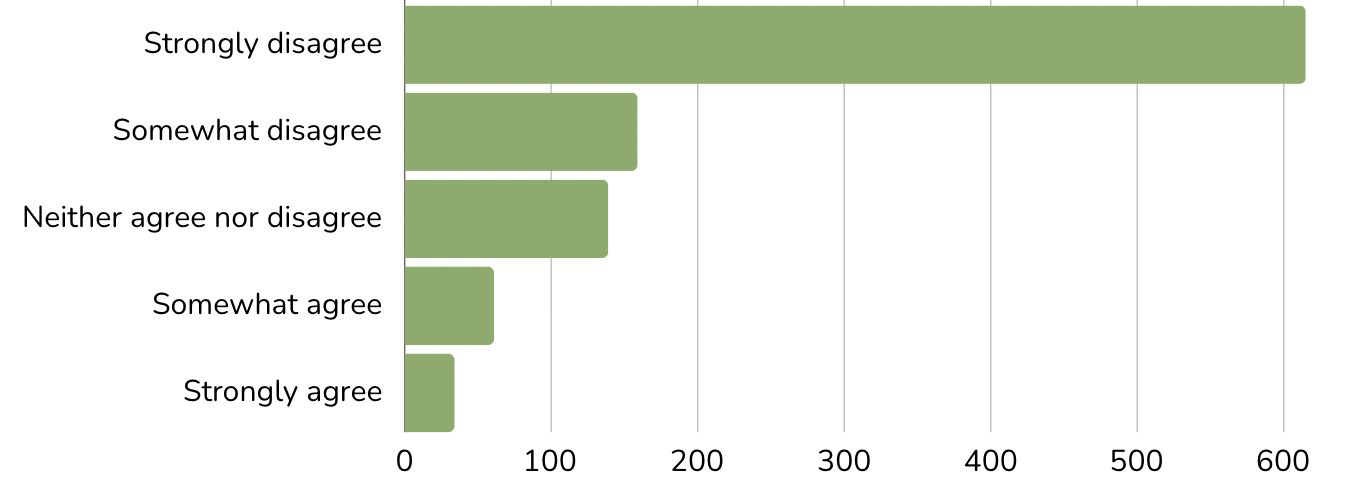
Affordability
Affordability is a key factor in ensuring that individuals and families can meet their basic needs and maintain a stable quality of life.
I have enough money to pay for my and my family’s basic needs.
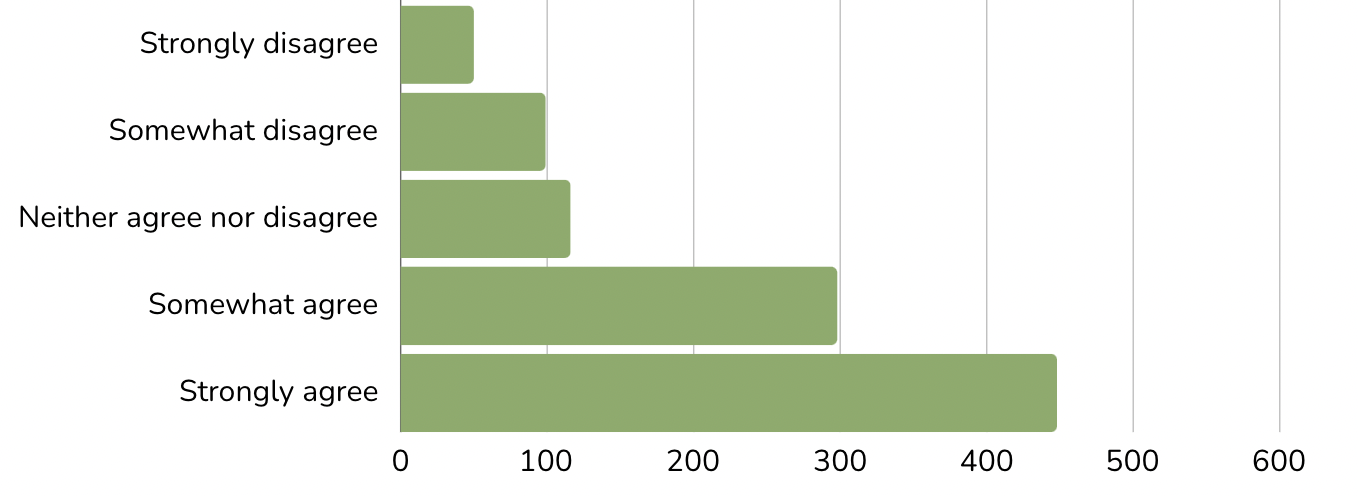
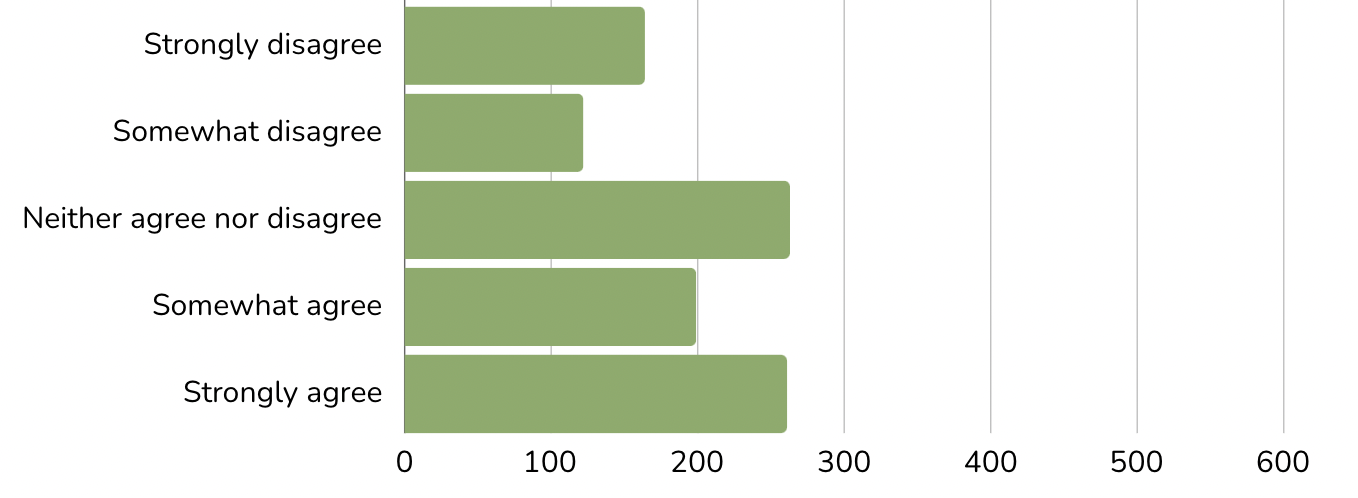
Des Plaines should have more affordable housing options.
Education
When children receive a strong education, and schools have the resources they need, it sets the foundation for lifelong opportunities and a thriving community.
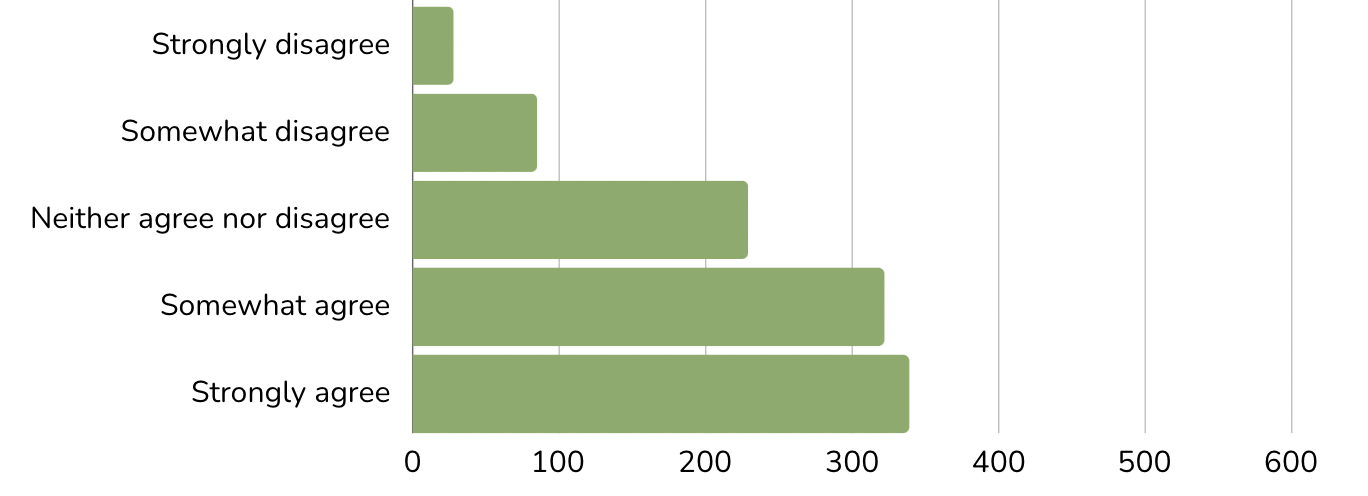
Children in my community have access to high quality education.
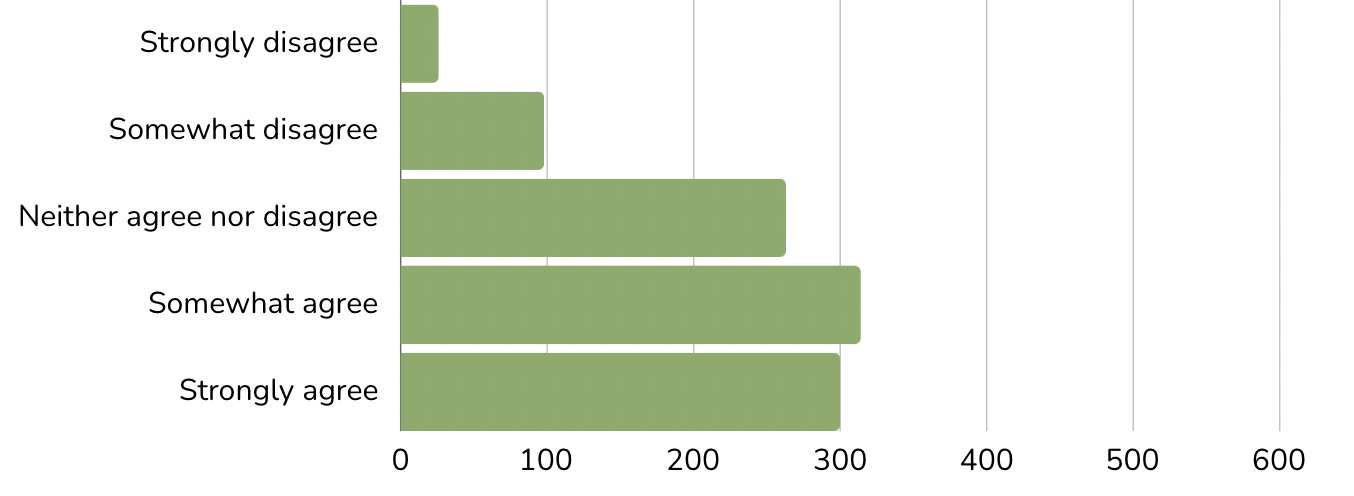
Schools in my community have what they need to provide a high quality education.
Des Plaines
Des Plaines is a unique community with issues specific to the city. Currently, Des Plaines is considering options to address train traffic.
I think the city should add overpasses or underpasses to improve train traffic and public safety responses in Des Plaines.
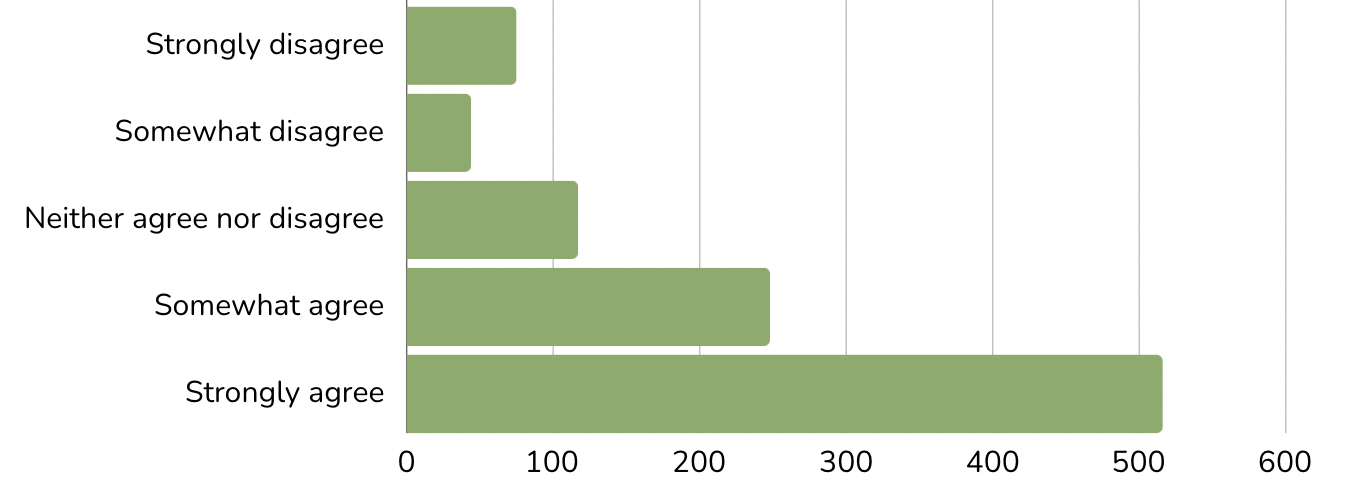
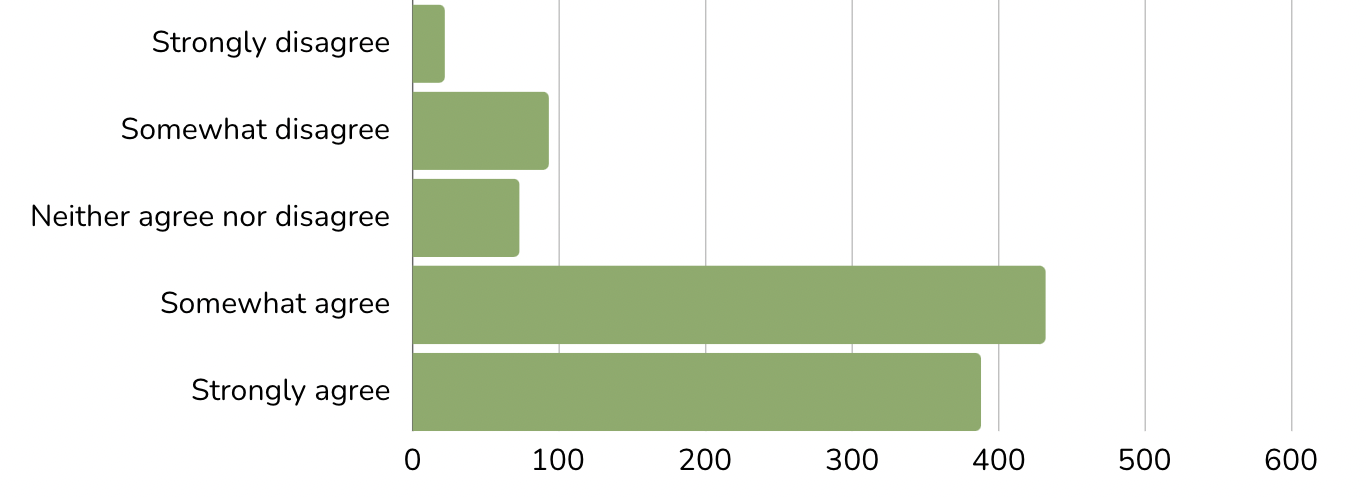
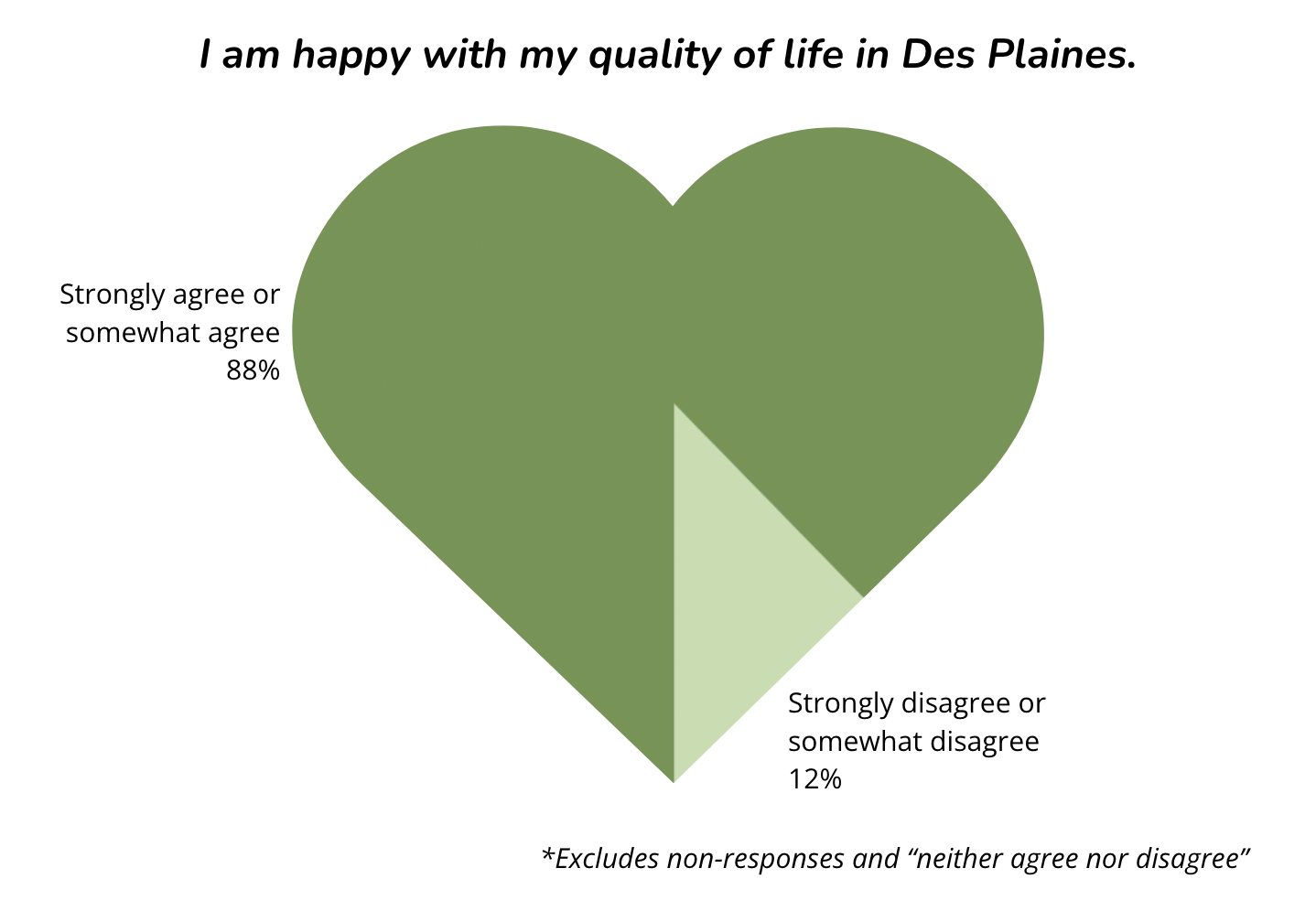
I am happy with my quality of life in Des Plaines.
Comments from Residents
Residents of Des Plaines expressed a range of desires and concerns for improving life in the city.
- Infrastructure and Traffic: Frequent train blockages, deteriorating roads, poor crosswalks, and insufficient sidewalks are concerns for pedestrians, bicyclists, older adults, and people with disabilities. There is a strong desire for safer sidewalks to enhance walkability. Residents also feel that an overpass alone won’t resolve traffic issues.
- Downtown: There is dissatisfaction with the current state of downtown Des Plaines, which many find lacking in businesses, restaurants, and social spaces compared to neighboring towns. People desire more varied spaces to eat, more places to shop, less vacant buildings, and to retain historical character.
- Housing: Some residents are concerned about the emphasis on building more condos and apartments while some residents have a strong desire for more affordable housing, especially for older adults and people with disabilities. Suggestions include repurposing existing structures and enhancing the downtown area’s appeal for residents and visitors.
- Community Spaces and Activities: There is a strong desire for more recreational activities, social events, and community gathering spaces. Suggestions include investing in spaces that cater to various age groups and interests and repurposing existing structures such as the historic bank at Lee Street and Ellinwood Street and the YMCA on Northwest Highway.
- Public Services and Governance: While city services are generally appreciated, there are mixed feelings about a few aspects of city governance, with some residents praising responsiveness from elected officials and others criticizing it. There are calls for better public safety, improved traffic management, and more diverse public programs.
- Urban Planning and Development: Residents request more cohesive and thoughtful planning and development with a clear vision for the city. There is also a desire for better beautification efforts such as tree planting, murals, and green spaces.
- Transparency and Engagement: A desire for greater transparency and responsiveness from city officials regarding development plans and business zoning is evident. Residents feel their thoughts and opinions are sometimes unheard, though it was expressed that this assessment and invitation for comments was appreciated.
Overall, residents seek a more vibrant, well-planned, and community-focused Des Plaines with improved infrastructure, diverse amenities, and enhanced services.
Summary of Assessment Results
- Residents generally have adequate access to transportation and they feel the city provides good recreational opportunities, but they do not know how to get help with food, mental health, or housing if needed.
- Regarding law enforcement, people in Des Plaines feel safe and respected.
- There is also strong support for non-police officer responses to non-violent 911 calls such as mental health crises, noise complaints, or parking issues.
- People mostly feel that they are informed about city news and events. They are more divided on whether or not residents have input on important city decisions. Additionally, while most people know who their Des Plaines representatives are, some do not.
- Social connections in the community are strong, with most people feeling like they belong, knowing and talking to their neighbors, and not experiencing discrimination.
- Most residents express having enough money to pay for their basic needs. Opinions about increasing affordable housing options are more divided.
- Residents agree that children in our community have access to high quality education and schools have what they need to provide it.
- There is overwhelming support for overpasses or underpasses to improve train traffic in Des Plaines.
Future Considerations
Consider non-police responses to non-violent 911 calls
74.% of survey respondents “agree” or “strongly agree” that the city should consider opportunities to add non-police officer responses to non-violent 911 calls such as mental health crises, noise complaints, or parking issues.

Increase communication and engage residents in city decision-making
Residents and service providers expressed a desire for increased two-way communications so that they feel they have input on city happenings, enhancing community involvement and trust.
Explore options for train overpasses or underpasses
87% of survey respondents “somewhat agree” or “strongly agree” that the city should add overpasses or underpasses to improve train traffic and public safety responses in Des Plaines.

Foster collaboration and networking across organizations
There are many resources for residents in Des Plaines, and increasing communication and networking opportunities across organizations would enhance awareness and service provision.
Provide interpretation and translation services to support accessibility
Des Plaines is a diverse city with 33% of residents being born outside of the U.S. and 45% of residents speaking a language other than English at home. Interpretation and translation services to resident-serving organizations, such as those provided by LanguageLine Solutions, could ensure all residents can access information and assistance.


Plan for future community assessments
Through regular community strengths and needs assessments, the city of Des Plaines can stay responsive to evolving resident priorities and challenges.
Sources
1. City of Des Plaines. (n.d.) Explore our city: History. City of Des Plaines. Retrieved March 16, 2024 from https://www.desplaines.org/explore-our-city/history
2. Britannica, T. Editors of Encyclopaedia. (2024). Des Plaines. Encyclopedia Britannica. https://www.britannica.com/place/Des-Plaines
3. U.S. Census. (2022). Age: Census Bureau tables. U.S. Census. https://data.census.gov/table?q=age&g=160XX00US1719642
4. Chicago Metropolitan Agency for Planning. (2023, July). Des Plaines community data snapshot: Municipality series. Chicago Metropolitan Agency for Planning. https://www.cmap.illinois.gov/documents/10180/102881/Des+Plaines.pdf
5. World Health Organization. (2024). Constitution of the World Health Organization. World Health Organization. https://www.who.int/about/accountability/governance/constitution
6. Centers for Disease Control and Prevention (CDC). (2022). Social determinants of health at CDC. Centers for Disease Control and Prevention. https://www.cdc.gov/about/sdoh/index.html
7. U.S. General Services Administration (2021). CDC Social Vulnerability Index (SVI). U.S. General Services Administration. https://catalog.data.gov/dataset/cdc-social-vulnerability-index-svi
8. American Community Survey. (2020). Social vulnerability index (SVI) in suburban Cook County [Map]. Cook County Health Atlas. https://cookcountyhealthatlas.org
9. U.S. Department of Health and Human Services. (n.d.) Healthy People 2030. U.S. Department of Health and Human Services. Office of Disease Prevention and Health Promotion. Retrieved March 16, 2024, from https://health.gov/healthypeople/objectives-and-data/social-determinants-health
10. Cohen, S., Prachand, N., Bocskay, K., Sayer, J., & Schuh, T. (2016, February). Healthy Chicago 2.0 community health assessment: Informing efforts to achieve health equity. Chicago Department of Public Health. https://www.chicago.gov/content/dam/city/depts/cdph/CDPH/Healthy%20Chicago/HealthyChicago_CHA_4102017.pdf
11. Community Economic Development Association. (2021). Comprehensive Community Needs Assessment Suburban Cook County 2021. Community Economic Development Association. https://www.cedaorg.net/wp-content/uploads/2022/01/2021-CEDA-Community-Needs-Assessment_Revisedcompressed.pdf
12. Alliance for Health Equity. (2022). Community Health Needs Assessment: Community Survey – Summary Report. Illinois Public Health Institute. https://allhealthequity.org/wp-content/uploads/2022/07/CHNA-Community-Survey_Equity-Analysis-Report_30June2022.pdf
 SPEAK Des Plaines